

REDUCING EMISSIONS, WATER USE AND WASTE
To minimise our environmental footprint, we are prioritising our effort and investment in areas where we have the biggest impact so we can deliver lasting change. We work with partners along our supply chain to reduce emissions, water use and waste, guided by science-based targets, also identifying environmental risks through our green coffee HREDD process.
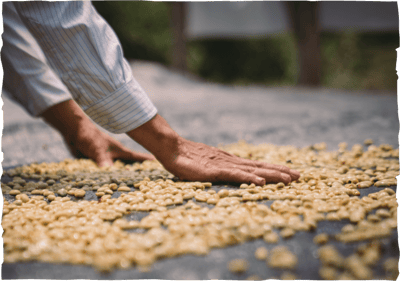
Striving towards Net Zero
We are innovating to develop more energy efficient processes and moving to renewable energy where possible, including using spent coffee grounds as fuel in our 5 instant coffee factories.
We are also supporting farmers to adopt regenerative agricultural practices, helping prevent deforestation. We believe that the coffee industry can reduce its emissions through collaboration - and we are acting on that belief. Our own targets prioritise absolute emission reductions in line with SBTi, with removals limited to residual emissions under SBTi Net-Zero criteria. Alongside our SBTi-validated Net Zero target for 2050, three new near-term targets - validated in 2024 by the Science Based Targets initiative (SBTi) and including the Forestry Land and Agriculture Guidance (FLAG) targets for forestry, land and agriculture - cover emission reduction across scopes 1, 2 and 3.
Our commitments:

SBTi
Delivering on our 2030 with new validated SBTi targets since 2024

Scope 1 & 2
Committed to reducing Absolute Scope 1 & 2 Greenhouse Gas Emissions* by 43.3% by 2030 (vs 2020 baseline)

Scope 3
Committed to reducing absolute forest, land and agriculture (FLAG) Scope 3 GHG emissions (coffee) by 30.3% and 25% all other Scope 3 non-FLAG emissions, both by 2030 (vs 2020 baseline).
*SCOPE 1, 2 & 3 GREENHOUSE GAS EMISSIONS EXPLAINED
Scope 1: Direct emissions resulting from activities under our control, such as on-site fuel combustion and company vehicles.
Scope 2: Indirect emissions from electricity we’ve purchased and used in our operations.
Scope 3: Indirect emissions that are not in our control but that result from our organisation, such as the farming of our coffee beans or the packaging and transport of our products.
Read More
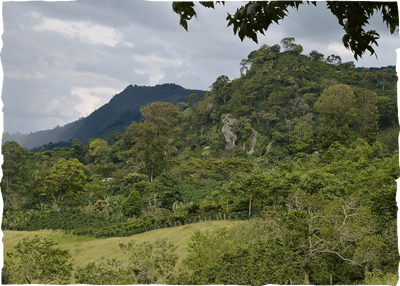
Our Commitment to Deforestation-Free Supply Chains
At JDE Peet's, avoiding deforestation is at the heart of our sustainability strategy. We set our targets to achieve deforestation-free supply chains for green coffee, palm oil, cocoa and paper and pulp by the end of 2025. We have made significant progress but have not yet reached full coverage accross all four commodities. We continue this work in line with our 2050 SBTi Net Zero target; our 2025 results and methodology are reported in our 2025 Annual Report.
Why Forests Matter
Forests play a crucial role in carbon storage, climate regulation, and biodiversity. They provide nature-based solutions for climate adaptation and mitigation, essential for our net-zero target. Forests play a crucial role in carbon storage, climate regulation, and biodiversity. They provide nature-based solutions for climate adaptation and mitigation, essential for our 2050 net-zero target. Historical land-use change accounts for approximately 11% of our carbon footprint (2025 calculation aligned with the Green House Gas Protocol) and preventing new forest loss reduces this component over time under GHG accounting rules.
Tackling Deforestation Risks
Deforestation risks arise from farmers expanding arable land and climate change driving shifts to higher-altitude regions. The EU Deforestation Regulation (EUDR), effective end-2025, sets stricter rules for commodities linked to deforestation on the EU market. Our Deforestation-Free programme applies to green coffee, palm oil, cocoa and paper and pulp. We map the origin of these volumes to their production areas as applicable, monitor them for deforestation using e.g. satellite, supplier data, third party verification and applies a 2020 cut-off date in our supplier requirements with follow up where risks are identified. Our approach and requirements are set out in our Forest Policy.
Our Holistic Approach
As coffee is our principal product, we go beyond regulatory compliance to make a lasting impact. We use spatial mapping, remediation, and targeted support for farmers in high-risk regions, collaborating with local authorities and governments to drive progress.
For cocoa and palm oil, we prioritize collaboration across the supply chain, focusing on responsible sourcing and effective farmer support programmes. In paper and pulp, we maximize recycled content and use certified virgin materials to ensure quality, sourcing all wood from managed plantations.
Our Forest Policy
Our Forest Policy underscores our commitment to protecting forests through Responsible Sourcing Principles. We engage with suppliers to ensure adherence to our principles and collaborate with communities, industry partners, and NGOs to address deforestation risks.

Optimising our resource use
We are working towards a circular economy in which packaging and materials are reused, recycled or composted; today 85% of our packaging components are designed to be reusable, recyclable or compostable. Our Research and Development team works to develop innovative solutions, such as tea bags and coffee pads, certified to EN 13432 for industrial composting in Europe. Industrial composting collection is not available in all countries - check local disposal guidance.
We are reviewing our complete portfolio to identify areas where we can optimise packaging weight and reduce packaging waste. We also focus on reducing our water usage and our manufacturing waste while constantly maintaining highest product quality and safety. We are striving to halve our total waste (vs 2020) and maintain waste-to-landfill under 1% across all our manufacturing sites by 2030.
Read More
Our commitments:

Packaging
100% of packaging components to be reusable, recyclable, or compostable by 2030. For our methodology refer to our 2025 Annual Report and Accounting Policies.
Waste to landfill
Committed to halve our total waste (vs 2020) and maintain waste-to-landfill under 1% across all our sites by 2030

Water usage
Committed to reduce our absolute water withdrawal across our manufacturing operation by 18% (vs 2020) by 2030